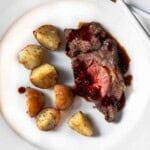
Garlic Pepper Chuck Eye Roast
Chuck eye roast is often called the butcher’s cut because it delivers rich ribeye-like flavor at a much lower price. When oven roasted properly, it becomes tender, juicy, and deeply beefy. In this recipe, the roast cooks low and steady until perfectly pink in the center, then it’s finished with a glossy balsamic fig glaze that turns this meal into something borderline irresistible.
Servings 10
Calories 411kcal
Equipment
- 1 Oven proof skillet
Ingredients
- 3 - 4 pound Chuck Eye Roast (America's Roast)
- 2 Tablespoons Cracked Mixed Peppercorns black, white, green and pink
- 5-6 cloves Garlic diced
- 1 teaspoon Kosher salt
Instructions
- Preheat oven to 350 degrees.
- Pat the roast dry and salt both sides. Heat an oven proof skillet over medium high heat. Add a couple tablespoons of oil. When oil is shimmering, add roast and sear for about 5 minutes.
- Turn the roast over and press the ground peppercorns onto the cooked side. Continue to sear until the other side is nice and browned, about another 5 minutes.
- Remove roast from heat and press the diced garlic onto the top side of the roast.
- Place roast in the skillet, in the oven and Insert ovenproof meat thermometer so tip is centered in thickest part of roast, not resting in fat. Do not add water. Do not cover. Roast in 1-½ to 1-¾ hours for medium rare;, or until meat thermometer reaches 135 degrees, 150 degrees for medium.
- Transfer roast to carving board; tent loosely with aluminum foil. Let stand 15 to 20 minutes. (Temperature will continue to rise about 10°F to reach 145°F for medium rare; 160°F for medium.
- Use a sharp chef knife to slice against the grain. Drizzle slices with Balsamic fig sauce, balsamic reduction or serve with Creamy Horseradish Sauce.
Notes
Tips For Success
Oven Safe Skillets: A cast iron skillet is a good choice. And my choice is my French Carbon Steel Skillet. Light weight, it’s the skillet of choice for Chef’s and is routinely used in restaurants to pan-sear steaks, chicken and even seafood.
Don’t skip searing the meat. This is a crucial step in getting the most flavor out of this meal. Searing creates what is technically called Maillard reaction. Maillard reaction is the process where a crust is created. Simply stated, it’s responsible for the complex flavors and aroma that makes bread taste toasty, and a grilled or seared burger taste charred. It’s a technique that brings science to your cooking skills.
Nutrition
Calories: 411kcal | Carbohydrates: 1g | Protein: 19g | Fat: 36g | Saturated Fat: 15g | Polyunsaturated Fat: 1g | Monounsaturated Fat: 16g | Cholesterol: 82mg | Sodium: 294mg | Potassium: 323mg | Fiber: 0.3g | Sugar: 0.02g | Vitamin A: 7IU | Vitamin C: 0.5mg | Calcium: 18mg | Iron: 2mg
